
Introduction
Living in a studio apartment as a woman is one of those life chapters that sounds romantic in theory—a tiny space that’s completely, unapologetically yours—but can feel overwhelming in practice. Maybe you just moved to a new city, and the only thing separating your bed from your “kitchen” is three feet of optimism. Maybe you’re rebuilding after a breakup, starting your first solo chapter, or working from the same room where you sleep, eat, and binge-watch reality TV. Whatever brought you here, one thing is clear: you deserve a home that feels beautiful, functional, and distinctly you—even if that home is 400 square feet.
That’s exactly what this guide to studio apartment decor ideas for women is here to help you create. This isn’t a generic list of “buy a plant and call it a day” tips. Instead, we’re going to walk through this together—starting with finding your personal aesthetic (coquette? cottagecore? clean girl?), then moving zone by zone through every corner of your studio: your sleep sanctuary, living lounge, vanity corner, work-from-home nook, kitchen area, and entryway. Along the way, you’ll find space-saving furniture ideas, renter-friendly hacks that won’t cost you your security deposit, and real budget breakdowns so you can make your studio feel like a full home—not half of one.
When I lived in a 320-square-foot studio after college, I remember standing in the doorway thinking, “Where does the bedroom end and the living room begin?” The answer was: nowhere. But with some intentional decisions about layout, color, and decor, that tiny box became my favorite home I’ve ever had. I want that for you, too. Let’s get into it.
What’s Your Aesthetic? Find Your Studio Style First
Before you buy a single throw pillow, take a breath and figure out what you’re actually drawn to. One of the biggest mistakes in decorating a small space is accumulating things without a clear vision—and in a studio, visual chaos hits harder because there’s no door to close on it. Choosing an aesthetic doesn’t mean your apartment needs to look like a Pinterest board; it just gives you a filter to run decisions through. When you know your vibe, you’ll stop second-guessing every purchase and start building a space that feels cohesive.
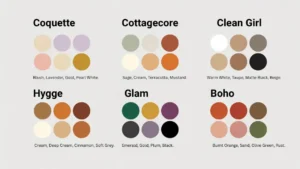
Below are six popular aesthetics women are gravitating toward in 2025–2026. You might be fully one style or a blend of two—that’s completely fine. The point is to anchor yourself before you start decorating. Once you have that clarity, every other decision in your studio apartment decor ideas for women will feel easier and more intentional.
Coquette — Soft, Romantic & Girly
The coquette aesthetic is unapologetically feminine—think soft pastels, bows, ruffles, and a general “French girl’s boudoir” energy. It’s romantic without being frilly and flirty without being childish. In a studio apartment, coquette decor works beautifully because it relies heavily on textiles and small details rather than large furniture pieces, meaning you can build the look without eating up floor space. Picture a blush velvet headboard, a gold-framed mirror leaning against the wall, delicate floral bedding, and a few satin ribbon accents tied around curtain rods or lamp bases.
- Color palette: Blush pink, cream, soft lavender, champagne gold, and antique white.
- Textures and materials: Velvet, satin, lace, tulle, and distressed vintage finishes.
- Key decor elements: Bows (on pillows, wall art, or curtains), vintage-style perfume trays, ornate mirrors, fresh or dried roses, and delicate pendant lights.
Cottagecore — Earthy, Vintage & Nature-Inspired
If your dream Sunday involves a linen apron, a jar of wildflowers, and a loaf of bread cooling on the counter, cottagecore is your lane. This aesthetic is earthy and nostalgic, rooted in natural materials, handmade touches, and a reverence for slower living. In a studio, cottagecore can feel remarkably grounding—it makes even the tiniest urban apartment feel like a countryside retreat. Focus on warm wood tones, woven baskets, vintage-inspired floral prints, and ceramic pieces that look like they came from a farmers’ market.
- Color palette: Sage green, warm cream, mustard yellow, terracotta, and soft brown.
- Textures and materials: Linen, cotton, rattan, raw wood, dried flowers, and hand-thrown pottery.
- Key decor elements: Floral curtains, vintage botanical prints, wicker storage baskets, a hand-knit throw, and open wooden shelving styled with ceramics and cookbooks.
Clean Girl — Minimal, Fresh & Elevated
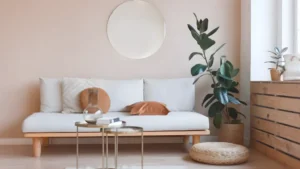
The clean girl aesthetic translates the beauty world’s “effortless but polished” energy directly into interiors. It’s minimalism with warmth—not cold or sterile, but deeply curated. Every item earns its place. In a studio, this approach is incredibly practical because it prevents visual clutter by design. Think neutral tones, clean lines, a few high-quality statement pieces, and spa-like details that make your home feel like a boutique hotel rather than a cramped apartment.
- Color palette: Warm white, oatmeal, taupe, soft caramel, and matte black accents.
- Textures and materials: Linen, organic cotton, travertine or marble accents, matte ceramics, and brushed metal.
- Key decor elements: A single oversized art print, neatly styled open shelves, a luxe-looking candle, a simple ceramic vase with one branch, and a matching set of neutral throw pillows.
Hygge — Warm, Cozy & Mood-First
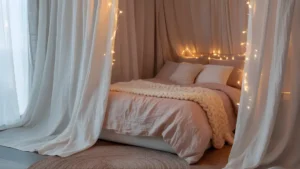
Hygge (pronounced “hoo-gah”) is the Danish concept of cozy contentment, and it is arguably the most natural fit for a studio apartment. This aesthetic prioritizes how a space feels over how it photographs—though hygge rooms tend to look incredible anyway. It’s all about layered textiles, warm amber lighting, soft seating you can sink into, and an overall atmosphere that says, “I never want to leave this room.” For women living alone, hygge decor can make a studio feel safe, enveloping, and deeply personal.
- Color palette: Warm caramel, deep cream, cinnamon, soft rust, and charcoal.
- Textures and materials: Chunky knit blankets, sheepskin rugs, beeswax candles, warm wood, and bouclé fabric.
- Key decor elements: An abundance of candles (real and LED), a reading nook with floor cushions, layered rugs, string lights on a warm setting, and a small tray with tea and a book always at the ready.
Maximalist Glam — Bold, Layered & Unapologetic
If minimalism makes you feel like something is missing, maximalist glam might be your answer. This aesthetic embraces color, pattern, metallics, and personality in a big way. The keyword is intentional—it’s not mess, it’s curated abundance. In a studio, maximalist glam works when you commit to a color story and layer within it. A gallery wall, a statement rug, metallic accents, and jewel-toned upholstery can make even 350 square feet feel like the most interesting room at the party.
- Color palette: Emerald green, deep plum, sapphire blue, gold, and hot pink as an accent.
- Textures and materials: Velvet, lacquered finishes, brass and gold metallics, animal print, and mirrored surfaces.
- Key decor elements: A bold gallery wall, a statement chandelier or pendant, patterned throw pillows, a bar cart styled with glassware, and an ornate area rug.
Boho — Free-Spirited & Textured
Bohemian decor is the free-spirited cousin that never goes fully out of style. It’s warm, eclectic, and layered—think rattan chairs, trailing houseplants, macramé wall hangings, and a general attitude that more texture equals more personality. In a studio, boho decor can feel incredibly welcoming because it encourages mixing rather than matching. A thrifted rug next to a modern shelf next to a handwoven basket? That’s not clashing—that’s boho working exactly as intended.
- Color palette: Burnt orange, dusty rose, sand, olive green, and warm gold.
- Textures and materials: Rattan, jute, macramé, woven cotton, and reclaimed wood.
- Key decor elements: A macramé wall hanging, an abundance of plants at varying heights, floor cushions, a woven pendant light, and a layered mix of patterned textiles on the bed.
Quick style finder: If you love bows, pink tones, and vintage perfume bottles, you’re probably in the coquette lane. If you’d rather have candles everywhere and never leave your blanket fort, lean into hygge. Drawn to a curated, “less is more” feel? Clean girl is calling. Love color, pattern, and the idea that your apartment should be as bold as you are? Say hello to maximalist glam. Prefer earthy tones and natural materials? That’s cottagecore or boho, depending on whether your vibe leans more “English garden” or “Marrakech market.”
Zone-by-Zone Decor Guide for Your Studio
In a studio apartment, you don’t have rooms—you have zones. The magic of a well-designed studio is that it feels like multiple rooms even when there isn’t a single wall dividing them. The trick is using rugs, lighting, furniture arrangement, and visual cues to tell your brain (and your guests’ brains) that this area is for sleeping, this area is for lounging, and this area is for working. This section turns the best studio apartment decor ideas for women into a simple zone-by-zone roadmap you can actually follow. Let’s walk through each zone and talk about how to make it both beautiful and functional.
Sleep Sanctuary — Making Your Bed the Star
Your bed is likely the largest piece of furniture in your studio, so it’s going to be a visual focal point whether you plan for it or not. The goal here is to make it look intentional—like a dedicated bedroom rather than a mattress someone shoved in the corner. Start by visually separating the sleeping area from the rest of the studio. A large area rug placed under and around the bed immediately defines the zone, even without walls. Sheer curtains hung from a ceiling-mounted tension rod can create a canopy effect that adds privacy and romance. A tall bookshelf or open shelving unit placed perpendicular to the wall can act as a room divider without blocking light.
For decor, invest in bedding that makes you excited to come home. This is not the place to skimp—your bed is your sanctuary, your reading spot, and probably your couch some nights. Layer a duvet with a textured throw at the foot, add two to three decorative pillows (not twelve—this is a studio, not a hotel lobby), and consider a headboard or a headboard alternative like a fabric wall hanging or peel-and-stick accent panel behind the bed. For more ideas on making the most of your sleeping area, check out our guide to Small Bedroom Ideas for Women.
Low-budget option: A new duvet cover, two accent pillows, and a $15 string-light canopy from a discount retailer can transform the vibe for under $60.
Mid-budget option: A fabric headboard ($150–$250), a quality area rug ($100–$200), and a linen bedding set ($80–$150) give the zone a finished, grown-up feel.
Living Lounge — Cozy Seating That Doesn’t Eat the Floor
Even in a studio, you deserve a place to sit that isn’t your bed. A small loveseat, a compact chaise, or even a pair of accent chairs with a tiny side table can carve out a living area that feels distinct and intentional. The key is scale: look for apartment-sized sofas (typically 60–72 inches wide) and avoid anything with bulky arms or a deep seat that will dominate the room. A sofa with visible legs creates an airy, open feeling because your eye can see the floor underneath it.
Arrange your seating to face away from the bed if possible—this is a simple psychological trick that makes the “living room” feel like its own space. A round or oval coffee table (or a lift-top coffee table that doubles as a dining surface and storage unit) works better than a rectangular one in tight quarters because there are no sharp corners to bump into. Add a small side table, a table lamp, and a throw blanket, and you’ve got a living lounge that feels inviting and complete.
Low-budget option: A floor pouf or oversized cushion ($25–$50), a small folding tray table ($15), and a cozy throw create a casual lounge zone for under $80.
Mid-budget option: An apartment-sized loveseat ($300–$500), a round side table ($50–$80), and a table lamp ($30–$60) build a more polished setup.
Vanity & Self-Care Corner
A dedicated vanity space isn’t a luxury—it’s a mood-booster. Even if you only have a two-foot-wide sliver of wall to work with, a small floating shelf with a mirror above it, a pretty tray for your skincare, and a ring light or clip-on vanity light can transform dead space into a self-care ritual zone. Wall-mounted folding desks (often sold as “Murphy desks”) also work beautifully as vanity surfaces that fold flat when not in use.
If you have slightly more room, a slim console table or a small vintage desk with a tabletop mirror works perfectly. Style the surface with intention: a few perfume bottles, a candle, a small plant, and your most-used products in matching containers. Keep the rest stored in a nearby basket, drawer organizer, or hanging fabric shelf. The point isn’t to display everything you own—it’s to create a spot that feels like a tiny spa. For more ideas, see our full guide on Bedroom Decor Ideas for Women, which includes vanity styling tips that translate perfectly to a studio.
Low-budget option: A $10 adhesive shelf, a $15 tabletop mirror, and a decorative tray you already own.
Mid-budget option: A slim vanity desk ($80–$150), a Hollywood-style LED mirror ($40–$70), and matching acrylic organizers ($20–$30).
Work-From-Home Nook That Still Feels Feminine
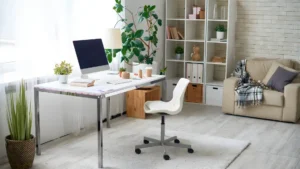
If you work from home—even part-time—your desk area needs to feel like a space where you can focus, not just a laptop balanced on your kitchen counter. A dedicated WFH nook also needs to pull double duty as decor, because in a studio, your Zoom background is literally your living room. Choose a desk that blends with your aesthetic: a sleek white writing desk for clean girl vibes, a vintage wooden secretary desk for cottagecore, or a gold-legged acrylic desk for glam.
Position your desk near a window if possible—natural light is flattering on video calls and scientifically proven to boost mood and focus. Behind your desk chair, create a simple “Zoom wall” with a small gallery arrangement, a floating shelf with a plant and a candle, or a piece of peel-and-stick wallpaper for a pop of pattern. Keep the desk surface clutter-free by using a desktop organizer, a small tray for pens and sticky notes, and cable management clips to keep cords from ruining the look. For a full deep-dive on desk setups, our guide to Small Home Office Ideas covers everything from layout to lighting.
Low-budget option: A wall-mounted fold-down desk ($40–$70), a clip-on ring light ($15), and a small organizer ($10) let you work from home without dedicating permanent floor space.
Mid-budget option: A stylish writing desk ($120–$250), an ergonomic chair with a feminine silhouette ($150–$200), and a curated shelf above the desk ($30–$50 for the shelf plus styling).
Kitchen & Dining Area — Cute, Not Cluttered
Studio kitchens are typically tiny—sometimes just a wall of appliances and a few feet of counter space. That doesn’t mean they can’t be styled. Open shelving (or even a single floating shelf) above the counter gives you display space for pretty mugs, cookbooks, or a small herb garden. Matching containers for staples like coffee, sugar, and flour instantly make a kitchen look more intentional. A peel-and-stick backsplash in a fun pattern (subway tile, Moroccan-inspired, or marble-look) is a renter-friendly upgrade that takes about an hour and costs $20–$40.
For dining, think creatively. A small bistro table and two chairs can fit in surprisingly tight spots. A wall-mounted drop-leaf table is perfect if you only need a dining surface occasionally. A bar cart serves double duty as both a drink station and extra counter/storage space—and it looks chic doing it. Style your bar cart with a tray, a few bottles of sparkling water, a pretty glass set, and a small vase. According to Apartment Therapy’s 2026 State of Home Design report, kitchens are getting bolder and more personal this year, with handmade tiles and rich color palettes replacing the sterile all-white trend—so don’t be afraid to add personality, even in a rental.
Low-budget option: Peel-and-stick backsplash ($20–$40), matching canisters ($15), and a small plant on the counter ($5).
Mid-budget option: A bar cart ($60–$120), open shelving installation ($30–$50), and a small bistro dining set ($100–$200).
Entryway Moment in 3 Feet or Less
Most studios don’t have a proper foyer, but you can fake one in about three feet of wall space near the front door. An entryway “moment” is a psychological signal—it tells your brain (and anyone who walks in) that this is a real home with intention behind it. Start with a hook rack or a set of adhesive hooks for bags, keys, and jackets. Add a small mirror above the hooks so you can check your look on the way out. If you have floor space, a slim bench or a narrow console table provides a landing strip for mail, sunglasses, and your wallet.
A small rug or mat at the door further defines the zone. Finish the area with one pretty element—a small framed print, a tiny shelf with a candle, or a trailing pothos plant on a wall-mounted hook. It takes five minutes to set up and changes the entire first impression of your studio.
Low-budget option: Adhesive hooks ($8), a small mirror ($10–$15), and a doormat ($10).
Mid-budget option: A slim entryway console ($60–$100), a set of matching brass hooks ($20), a mirror ($25–$40), and a small catch-all tray ($10).
Space-Saving Furniture Every Woman in a Studio Needs
In a studio apartment, every piece of furniture should earn its place—ideally by doing at least two jobs. This doesn’t mean your home has to look like a tiny-house-reality-show set with hidden compartments everywhere, but it does mean being strategic. The furniture you choose determines how much usable space you have left over, so think of this section as the structural backbone of your studio’s design and as the practical heart of your studio apartment decor ideas for women.
Multi-Functional Must-Haves
The single most impactful investment for most studios is a bed with built-in storage. A platform bed with drawers underneath eliminates the need for a separate dresser, which can free up an entire wall of floor space. If you’re on a tighter budget, a basic bed frame paired with under-bed storage bins achieves a similar effect for a fraction of the cost. Other multi-functional heroes include sofa beds (modern ones are far more stylish than the creaky futons of the past), lift-top coffee tables that open to reveal storage and a raised surface for eating or working, and storage ottomans that serve as seating, a footrest, and a hidden linen closet in one.
Budget callout: Under $200, look for a basic storage bed frame from retailers like IKEA or Wayfair, or a lift-top coffee table. In the $200–$600 range, you can find a quality sofa bed or a stylish platform storage bed that looks like real furniture, not a dorm hack.
Vertical Storage That Looks Like Decor
When floor space is at a premium, walls become your best friend. Floating shelves, ladder shelves, and tall narrow bookcases draw the eye upward and create the illusion of height while providing real storage. Style them with a mix of functional items (books, baskets, storage boxes) and decorative ones (art, candles, plants), so they serve both purposes at once. A pegboard mounted on the wall can hold everything from kitchen utensils to jewelry to office supplies, and it looks intentionally curated rather than cluttered when styled well.
Room Dividers That Double as Storage
If you want to physically separate zones—say, your bed from your living area—a room divider that also provides storage is the smartest play. Open-back shelving units (like IKEA’s KALLAX) are classic studio dividers because they let light pass through while creating a visual boundary and giving you cube storage on both sides. Curtains are another lightweight option; hang them from a ceiling-mounted tension rod and pair them with string lights for a dreamy, layered look. For a deeper exploration of furniture solutions for small spaces, head to our full guide on space-saving furniture ideas.
Mirrors and Transparent Pieces for Visual Space
Mirrors are the oldest trick in the small-space playbook, and they still work. A large leaning mirror on one wall can make a studio feel nearly double its size. Acrylic or glass furniture—like a clear coffee table, lucite bookends, or ghost chairs—provides function without visual weight, which is crucial in a room where every item is always visible.
Color Palettes for a Feminine Studio (By Aesthetic)
Color is one of the most powerful tools you have in a studio, but it’s also where things can go wrong fast. In a space with no walls to break up sightlines, too many competing colors create visual noise that makes the room feel smaller and more chaotic. The rule of thumb is to choose a base palette of two to three main colors, then layer in one to two accent tones. Repeat your chosen colors throughout different zones—this is what makes a studio feel cohesive rather than like six tiny rooms smashed together.
Coquette & Clean Girl Palettes
These two aesthetics share a love of soft, light tones and pair beautifully together if you want to blend them. For coquette, start with blush pink and cream as your base, then accent with champagne gold and touches of soft lavender. Apply it by keeping walls and larger furniture pieces neutral (white, cream, or the softest pink), then bringing the richer tones in through textiles like pillows, curtains, and bedding. Clean girl palettes lean more toward oatmeal, warm white, and taupe, with accents of matte black or walnut brown. Apply the color through materials rather than paint—linen, natural wood, stone-look ceramics—so the palette feels elevated and tactile rather than flat.
Cottagecore & Hygge Palettes
Both of these aesthetics live in the warm, earthy spectrum. Cottagecore favors sage green paired with warm cream and terracotta, while hygge leans into deeper tones like caramel, cinnamon, and charcoal. In a studio, cottagecore palettes work best when the greens and yellows appear in smaller doses—a sage throw blanket, terracotta pots, mustard accent pillows—against a cream or soft white base. Hygge palettes can handle darker tones because the aesthetic relies on warm, low lighting anyway; a deep rust-colored duvet or a charcoal linen sofa can anchor the room without making it feel small, as long as you layer in enough warm lighting to balance the depth.
Maximalist Glam & Boho Palettes
Here’s where color gets fun—and where discipline matters most. For maximalist glam, choose one bold jewel tone as your anchor (emerald, sapphire, or plum) and pair it with a metallic (gold is the classic choice) and a neutral (black, cream, or charcoal). Let the jewel tone dominate one or two major pieces—a velvet sofa, a statement rug—and let gold accents repeat through hardware, frames, and accessories. Boho palettes are warmer and earthier: burnt orange and dusty rose make a stunning pair when grounded by sand and olive green. The trick in boho is to vary the texture of each color rather than adding more colors—a burnt orange pillow in linen, a burnt orange candle in ceramic, and a burnt orange rug in woven jute all read as the same color but feel richly layered.
Lighting Ideas That Romanticize Any Studio
If there’s one single change that can make the biggest emotional difference in a studio apartment, it’s lighting. That flat, buzzy overhead fixture that came with your rental is doing absolutely nothing for you—in fact, it’s probably making your space feel colder, harsher, and more institutional than it needs to be. The goal in a studio is layered lighting: multiple light sources at different heights and intensities that you can mix and adjust depending on what you’re doing and how you want to feel.
Think of your lighting in three categories.
Ambient lighting is the overall, room-filling glow: this is where string lights, paper lantern pendants, and floor lamps come in. Go for warm-toned bulbs (2700K is the sweet spot for cozy warmth).
Task lighting is functional illumination where you need it: a desk lamp for your WFH nook, a reading lamp on your nightstand, a clip-on light near your vanity mirror.
Accent lighting is the mood-maker: candles, fairy lights woven through a shelf display, a sunset lamp casting a warm glow on the wall, or LED strip lights tucked behind a headboard or under a floating shelf.
For your evening routine, being able to turn off the overhead light entirely and rely on your ambient and accent layers is transformative. Your studio will instantly feel warmer, more intimate, and more like a sanctuary. For your WFH hours, make sure your desk has its own dedicated task light so you’re not straining your eyes. A smart plug or a simple power strip with a switch can let you turn on all your “mood lighting” at once—a tiny hack that makes a big daily difference.
Wall Decor Ideas for Women (Renter-Friendly)
Walls are prime real estate in a studio—they’re the one area where you can go big without taking up any floor space. But if you’re renting, the fear of losing your security deposit can keep walls bare and boring. The good news is that renter-friendly wall decor has come a long way, and there are dozens of ways to create stunning walls without putting a single nail in the drywall.
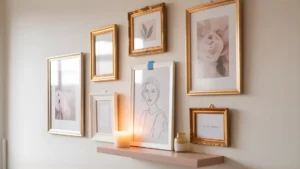
Gallery walls are one of the most popular wall treatments for good reason: they add personality, fill a large wall, and can be adapted to any aesthetic. Use Command Strips or adhesive picture-hanging strips to mount frames without holes. For a coquette gallery wall, think gold frames, floral prints, and a small bow-shaped mirror. For a clean girl, go with matching thin black frames in a grid arrangement with black-and-white photography or line art. Boho gallery walls look best with a mix of frame sizes, materials (wicker, wood, rattan), and content (photos, prints, a macramé piece, a small woven basket).
Peel-and-stick wallpaper is a renter’s best friend. An accent wall behind the bed, a faux arch shape applied over the desk, or even a patterned strip inside a set of open shelves can add drama and personality for $20–$60 that peels cleanly off when you move.
Fabric wall hangings and tapestries are another easy option—they add color and texture while also softening acoustics, which matters in a studio where sound bounces off every surface. Hang them with adhesive hooks or a simple tension rod system.
Washi tape is an underrated tool for creating geometric patterns, faux frames around prints, or even a simple accent border near the ceiling. And finally, mirrors—strategically placed across from a window or behind a lamp—bounce light around the room and make the entire studio feel more open.
Trending Feminine Decor Elements in 2025–2026
Every year brings a new wave of decor details that are perfectly suited to feminine spaces, and 2025–2026 has delivered some particularly good ones. According to The Spruce’s 2026 trend report, this year’s biggest design movements include curved architecture and forms, warm modernism, and a push toward spaces that feel personal and handcrafted rather than mass-produced—all of which pair beautifully with feminine studio decor.
Bows, ribbons, and rosettes continue to ride the coquette wave and have moved beyond fashion into interiors. You’ll find bow-shaped throw pillows, ribbon-trimmed lampshades, and rosette-adorned mirrors.
Florals are back in a major way—not the tiny, timid prints of the past, but bold, painterly blooms on bedding, wallpaper, and curtain panels.
Lace and ruffle textiles are appearing on everything from duvet edges to curtain hems, adding softness and romance without bulk. Curvy silhouettes in furniture and decor—wavy mirrors, scalloped-edge shelves, rounded tables, and cloud-shaped lamps—reflect the broader design shift toward organic, soft forms that feel welcoming rather than rigid.
One micro-trend worth noting: the “vanity shelf” styling approach, where a single floating shelf or a small table surface is curated with perfume bottles, a candle, a jewelry tray, and a small mirror to create a miniature display that’s equal parts functional and aesthetic. It’s perfect for studios because it requires almost no space but creates a big visual impact.
A word of caution: trends are meant to be tasted, not swallowed whole. Pick two or three trending elements that genuinely resonate with your chosen aesthetic and leave the rest. In a studio, every piece is on display, so a few well-chosen trend items will feel current and intentional, while too many will feel chaotic and like they’ll look dated in a year.
Renter-Friendly Hacks for Feminine Studios
Renting a studio comes with restrictions—most leases prohibit painting, drilling, or making permanent changes. But “renter-friendly” doesn’t have to mean “boring.” There’s an entire ecosystem of products and strategies designed to let you customize your space and remove every trace when you leave.
Removable wallpaper and contact paper can transform cabinets, accent walls, countertops, and even appliance fronts. Look for options that specifically say “repositionable” and “clean removal.”
No-drill curtain solutions include tension rods (great for room dividers and closet doors) and adhesive-mount curtain rod brackets that hold lightweight rods without touching the wall with a screw.
Adhesive hooks, shelves, and rails from brands like Command, Gorilla, and 3M can hold surprising amounts of weight—always check the weight rating and follow the installation instructions to the letter for clean removal.
Freestanding solutions that mimic built-ins are a game-changer. A tall bookcase placed against a wall looks like a built-in library. A rolling kitchen island adds counter space you can take with you when you move. A garment rack with a shelf serves as an open closet when your studio doesn’t have adequate closet space.
Temporary flooring and rugs are another powerful tool: layering a large area rug over bland carpet or vinyl instantly changes the feel of the room, and peel-and-stick floor tiles can cover ugly flooring in a weekend (test a small area first to confirm clean removal on your specific floor type).
Studio Apartment Decor on a Budget (3 Tiers)
One of the most common questions about decorating a studio is “How much is this actually going to cost me?” The answer depends on where you’re starting and how far you want to go. Here are three realistic budget tiers, each with a sample allocation so you can see how a real person might spend the money across different zones.
Under $100 — Quick Wins
This tier is for when you want to make a noticeable difference this weekend without breaking the bank. Focus on textiles, lighting, and small accessories—the items that have the highest impact-per-dollar in a studio. A new set of throw pillow covers ($15–$25 for a pair) can shift your entire color scheme. A string light set or a paper lantern shade ($10–$20) changes the lighting mood immediately. Art prints downloaded and printed at a local shop ($5–$15 for two to three prints) fill blank walls. A small plant from a grocery store ($5–$10) adds life. Matching storage baskets ($10–$15) tidy up visual clutter. A scented candle ($8–$15) adds a self-care element. All in, you’re looking at $50–$100 for a studio that feels noticeably more pulled together.
$100–$500 — Build the Foundation
With a few hundred dollars, you can make one major upgrade and several supporting changes that bring the whole studio together. Allocate about 40–50% of this budget to one anchor piece: a quality area rug ($100–$200), a new duvet and bedding set ($80–$150), or a small piece of furniture like a bar cart, bookshelf, or vanity desk ($80–$150). Spend another 30% on lighting upgrades—a floor lamp, a desk lamp, and a set of candles or fairy lights ($40–$80). Use the remaining 20–30% on wall decor, organizational accessories, and plants ($40–$100). This tier is where your studio starts to look like you chose this space rather than just landed in it.
$500–$1,000 — Full, Cohesive Refresh
This budget allows for a transformative overhaul that touches every zone. A sample allocation might look like this: a sofa or loveseat ($300–$500), a coordinated bedding refresh with a headboard or headboard alternative ($150–$250), a full lighting scheme with three to four new fixtures or lamps ($80–$120), a gallery wall or statement wall decor ($50–$80), a rug that ties the space together ($80–$150), and finishing touches like a mirror, plants, candles, and organizational accessories ($60–$100). At this tier, you can create a studio that looks and feels like a professionally designed space—cohesive, layered, and entirely personal. For more ideas on decor at every price point, explore our guide to small apartment decor ideas for women.
Mood-Boosting Decor for Women Living Alone
Your environment has a measurable impact on your mental health. This isn’t just an interior design talking point—it’s backed by research. A study published in the journal Building and Environment found that interior design elements like lighting quality, natural materials, and spatial organization significantly influence emotional perception and psychological restoration. The American Society of Interior Designers (ASID) has published extensive research on what they call the neuropsychology of space, demonstrating that intentional design choices—curved forms, biophilic elements, proper lighting, and sensory comfort—directly shape emotional well-being. When you live alone in a small space, these effects are amplified because your entire home is one room. Making that room work for your mood isn’t indulgent—it’s practical self-care.
Plants that survive in low light are one of the simplest mood boosters. Pothos, snake plants, and ZZ plants thrive in the indirect light typical of urban studios and add a living, breathing element that makes any space feel healthier. Scent is another powerful lever: the ASID research notes that olfactory input travels directly to the brain’s emotion and memory centers, which is why a familiar, comforting candle or essential oil diffuser can shift your entire mood within minutes. Choose scents you associate with calm (lavender, vanilla) or energy (citrus, eucalyptus), depending on the zone.
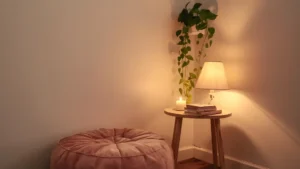
Finally, consider creating a “joy corner”—a small, dedicated area designed purely for recharging. This could be a reading nook with a floor cushion, a small lamp, and a stack of books. It could be a self-care tray on a shelf with your favorite mask, a candle, and a journal. It could even be a tiny altar or intention-setting space with a crystal, a photo, and a plant. The specific form doesn’t matter as much as the intention: one spot in your studio that exists solely to make you feel good.
Real Women, Real Studios — Before & After Inspiration
Sometimes the most helpful thing isn’t a tip list—it’s seeing how someone in a similar situation transformed their space. Below are three conceptual studio makeovers based on common scenarios women face. These are composite examples drawn from real situations, designed to show you what’s actually possible.
Profile 1: Tiny, Dark Studio → Bright Hygge Nest
Before: A 300-square-foot north-facing studio with gray walls, no overhead lighting besides a single harsh fixture, and a mattress on the floor. The renter, a 26-year-old starting a new job in the city, described the apartment as “depressing” and “like living in a cave.” Clutter accumulated quickly because there was no organizational system, and she avoided spending time at home.
After: She invested about $400 over two months. The mattress went onto a platform bed frame with built-in drawers ($180), which eliminated the need for a separate dresser. She replaced the overhead bulb with a warm-toned one and added a paper lantern shade ($12), then layered in a floor lamp ($35), fairy lights along the bed wall ($10), and two candles. A large round mirror ($40) placed across from the window bounced the limited natural light deeper into the room. A chunky knit throw ($25), two textured pillow covers ($18), and a cream area rug ($60) brought warmth. A small pegboard near the entry ($20) organized keys and bags.
Emotional result: “I actually want to be home now. It feels like a hug when I walk in.”
Profile 2: Chaotic Coquette Desk Area → Functional WFH Nook
Before: A 28-year-old remote worker had a beautiful pink-and-gold aesthetic going in her studio, but her “desk” was a cluttered corner of the kitchen counter. Papers, makeup, work supplies, and dishes all competed for the same surface. She dreaded video calls because her background was the kitchen mess, and she regularly worked from bed, which was hurting her sleep quality.
After: She purchased a slim white writing desk ($90) and placed it perpendicular to a wall near the window, creating a dedicated nook. A small gold desk lamp ($22) and a desktop organizer ($15) kept the surface clean. Behind her desk chair, she mounted a small floating shelf with Command Strips ($15) and styled it with a pink candle, a small print, and a trailing plant—creating a “Zoom wall” that consistently drew compliments from coworkers. Total spend was about $160.
Emotional result: “Having a real workspace made me feel like I was taking my career seriously, not just my aesthetic. And I finally stopped working from bed.”
Profile 3: Bland Rental → Boho Sanctuary on a $250 Budget
Before: A 32-year-old woman moving into her first solo apartment after a breakup rented a standard beige-everything studio. White walls, beige carpet, beige kitchen, zero personality. She felt like the apartment reflected her emotional state—neutral to the point of emptiness—and wanted to create a space that felt warm, personal, and like a fresh start.
After: She started with color and texture. A large jute area rug ($70) defined the living zone and added warmth to the beige carpet. A macramé wall hanging she found secondhand ($18) became the focal point above the sofa. She swapped out the stark white curtains for warm, terracotta-toned linen panels ($35). Six small plants at varying heights—on the windowsill, hanging from a macramé hanger, sitting on a stack of books—brought life into every zone ($30 total). A set of amber glass jars ($15) for the kitchen, a woven storage basket ($20) for the entryway, and a set of warm-toned fairy lights ($10) completed the look. Budget: approximately $198.
Emotional result: “Every time I add something, it feels like I’m choosing myself. This apartment is the most ‘me’ place I’ve ever lived.”
Frequently Asked Questions
How do I decorate a studio apartment as a woman on a small budget?
Start with the items that make the biggest visual impact for the least money: textiles (pillow covers, a throw blanket, curtains), lighting (swap harsh bulbs for warm ones, add string lights or a paper lantern shade), and wall decor (printable art, a mirror, or a tapestry). Focus on one zone at a time—your bed area is usually the highest-return starting point because it’s the largest visual element in the room. Thrift stores, Facebook Marketplace, and discount retailers are excellent sources for budget-friendly decor that still looks polished.
What colors make a studio apartment look bigger?
Light, warm neutrals—warm white, cream, soft beige, and light gray—reflect the most light and create an open feeling. That said, dark colors aren’t off-limits; a single dark accent wall (in navy, forest green, or charcoal) can actually add depth and make the room feel more intentional. The key is consistency: limiting your palette to two to three main tones throughout the studio prevents visual fragmentation, which is what actually makes a small space feel cramped.
How do I separate zones in a studio without building walls?
The most effective zone-defining tools are area rugs (each zone gets its own rug or sits on a distinct section of one large rug), lighting changes (a floor lamp marks the living area, fairy lights mark the bedroom), furniture placement (a sofa back or a bookshelf placed perpendicular to the wall creates a boundary), and curtains or screens. You don’t need all of these—even one or two strategies per zone boundary will make the separation feel real.
What furniture should I avoid in a studio apartment?
Avoid bulky, single-purpose furniture with no storage. A large traditional dining table, an oversized sectional sofa, heavy entertainment centers, or a standalone dresser, when you could use a storage bed instead—all of these consume floor space without giving enough back. Also, to avoid dark, heavy furniture that sits flat on the floor (no visible legs), as it can make a studio feel more enclosed. Opt instead for pieces with legs, transparent materials, and multi-functional designs.
Is it worth investing in peel-and-stick wallpaper for a rental?
For most renters, yes—with caveats. Peel-and-stick wallpaper can dramatically change the look of a space for $20–$60, and quality products remove cleanly from smooth, painted walls. However, test a small, hidden area first (especially on textured walls or older paint), and follow the manufacturer’s removal instructions carefully when you move out. It’s one of the highest-impact, lowest-risk renter-friendly upgrades available.
Conclusion
A studio apartment is not a compromise—it’s a canvas. It’s an entire home in one room, and when you approach it with intention, it can be one of the most personal, beautiful spaces you’ll ever live in. You don’t need a big budget, a landlord’s permission, or a degree in interior design. You just need a clear aesthetic direction, a zone-by-zone plan, and the willingness to apply these studio apartment decor ideas for women so your space reflects who you are right now.
If this guide feels like a lot, here’s your permission to start small. Pick one aesthetic from the style section that made your heart light up. Choose one zone—just one—and give it some love this weekend. Maybe it’s finally getting proper bedding. Maybe it’s creating that tiny entryway moment. Maybe it’s just swapping out a harsh lightbulb for something warm. Each small change builds on the last, and before you know it, your studio won’t feel like a placeholder. It’ll feel like home—and like a real-life version of the studio apartment decor ideas for women you’ve been saving on Pinterest.
For more inspiration, explore our guides to small apartment decor ideas for women, space-saving furniture ideas, and Small Bedroom Ideas for Women. And if this guide helped you, save it, pin it, or send it to a friend who’s about to sign a lease on her first studio. She’ll thank you later.